

Finding Aruba’s vibrant marine life requires moving past the assumption that any sandy shore is a safe entry point. While the island’s coastal waters are consistently warm, averaging 78 to 84 degrees Fahrenheit, and offer exceptional visibility up to 100 feet, the underwater terrain is highly sensitive to wind and currents. Success means choosing your entry point based on daily ocean conditions and your personal swimming stamina.
For active travelers, a successful trip relies on matching the location to your specific swimming abilities. This guide breaks down the physical forces at play along the Aruban coast and provides a step-by-step protocol for exploring the island’s shallow reefs, turtle coves, and deep-water shipwrecks safely.
The Reality of Aruban Snorkeling: Wind, Waves, and Location Strategy

Many visitors arrive in Aruba expecting to walk off any sandy beach and find calm, reef-lined waters. In reality, the island’s coastline is starkly divided by wind and geography. Steady northeast trade winds buffet the north and northeast coasts, creating highly dangerous, rough waves and violent surf. Swimming or snorkeling on these windward shores is unsafe under any circumstances.
For calm-water snorkeling, you must focus entirely on the sheltered western and southern shores. Here, the island’s landmass blocks the trade winds, creating the tranquil conditions necessary for safe exploration. In these protected zones, you can expect consistently warm coastal waters averaging 78 to 84 degrees Fahrenheit, paired with excellent water clarity that offers a maximum underwater visibility of up to 100 feet.
Prerequisites and Safety Checks Before You Enter the Water
Safe shore-entry snorkeling requires proper preparation before your feet touch the water. Ensure you have the necessary equipment and complete these safety assessments before selecting your site:
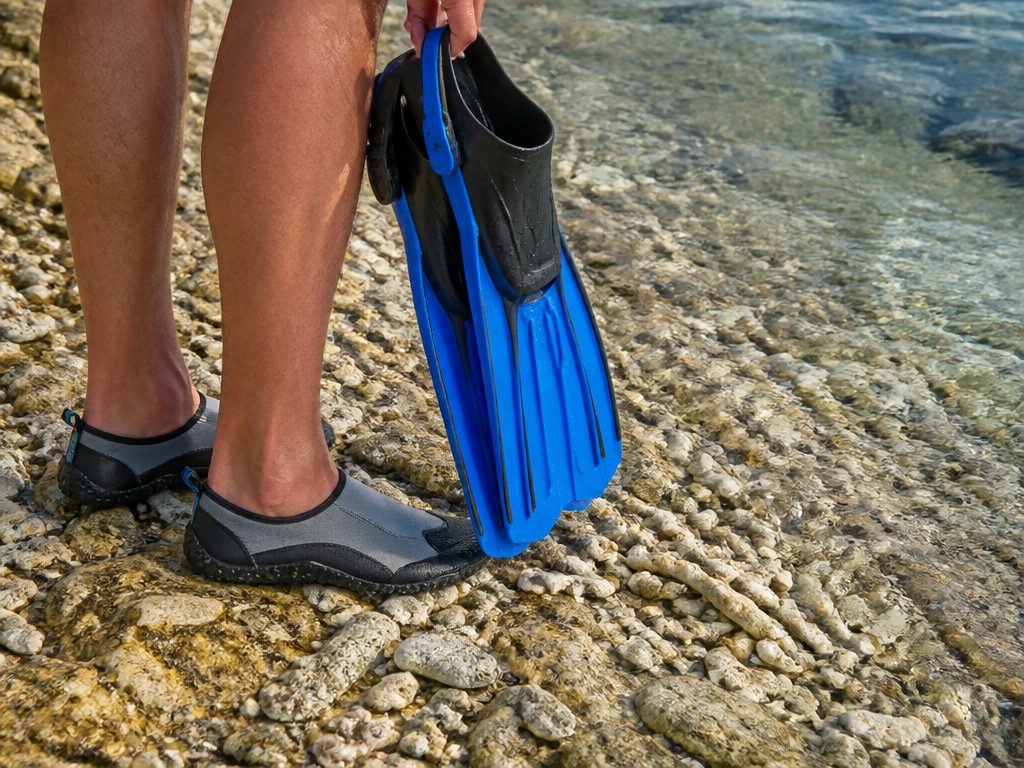
- Sturdy water shoes: Essential for navigating rocky shore entries and sharp coral rubble common at the water’s edge. Standard swim fins should be carried to the water and put on once you are deep enough to float.
- Swimming stamina check: Honestly gauge your comfort level in open, moving water. If you cannot swim comfortably in deep water without a flotation aid, restrict yourself to shallow, protected bays.
- Current analysis from shore: Even on the calm western coast, localized currents can pull swimmers away from the beach. Look for gaps in the shallow reef where waves break differently; these gaps often channel water back out to the open sea. Watch the movement of seaweed or suspended sand near the shore to determine the speed and direction of the local drift.
The Beginner’s Protocol: Gentle and Near-Shore Western Reefs
If you are new to snorkeling or swimming in open water, follow this sequence to build confidence and ensure a safe experience:

- Target the calmest western locations where reefs begin very close to the shore. This eliminates the need for long, exhausting swims over deep water and keeps you within comfortable distance of dry land.
- Head to Boca Catalina for your first session. This cove features a gentle sea and shallow reef structures situated just yards from the sandy beach, making it an ideal starting point where you can easily stand up if needed.
- Use Arashi Beach as your primary alternative site. Located just north of Boca Catalina, Arashi offers a similarly gentle sea and shallow near-shore reefs, with a sandy bottom that transitions smoothly into the reef zone.
You will know you have executed this protocol successfully when you experience an easy shore entry without fighting crashing waves, and immediately spot brain coral and schooling fish within seconds of putting your face in the water, all without feeling any outward pull from the current.
The Turtle Spotting Window: Timing Your Session at Tres Trapi
Tres Trapi, a small cove carved into the low limestone cliffs of the western coast, is the premier destination for swimming with sea turtles from the shore. However, encountering these animals requires adhering to a strict schedule.
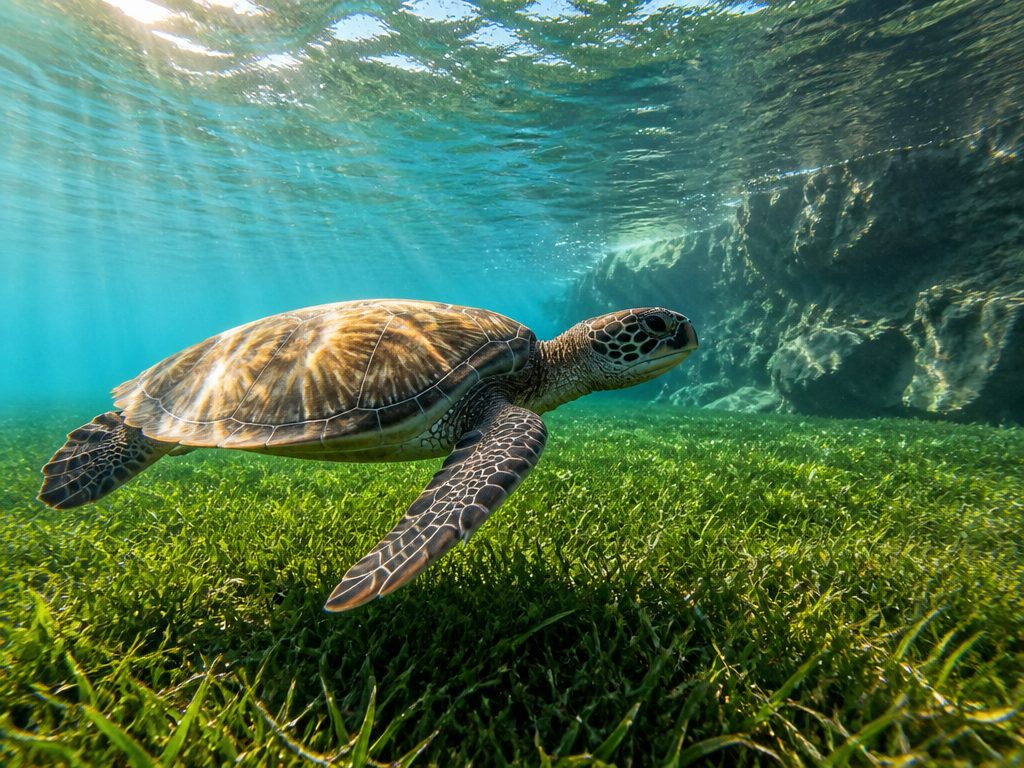
- Plan your arrival strictly between 6:00 a.m. and 11:00 a.m. During these early morning hours, the turtles feed on the shallow sea grass beds close to the rocky steps.
- Prepare for the behavioral caveat: turtles are highly elusive and consistently retreat to deeper, offshore waters later in the day as boat traffic and swimmer numbers increase.
Arrive before the mid-morning crowds if you want to swim with sea turtles; once the tour boats arrive, the animals retreat to deeper, offshore waters.
If you arrive after 11:00 a.m., do not waste energy swimming far out into the open blue looking for turtles. Instead, execute this branch decision: pivot your focus downward to view the large, cushion-like starfish beds that lie undisturbed in the shallow, sandy patches close to the cliffs.
Navigating Advanced Zones: Current-Heavy Reefs and Mangel Halto
For experienced swimmers, the sheltered southern mangrove coast offers a different kind of underwater landscape. Mangel Halto is the prime example, featuring a shallow, protected lagoon that terminates in a barrier reef drop-off.

This site presents a clear trade-off. The advanced zones beyond the barrier reef offer superior coral health and larger marine life like eagle rays and barracudas, but they carry high risk. The incoming and outgoing tides push massive volumes of water through narrow cuts in the reef, creating incredibly strong, directional currents.
To navigate Mangel Halto safely from the shore, follow these precise steps:
- Locate the narrow, sandy channel cut through the shallow reef flats from the mangrove edge. This is your highway out to the deep barrier wall.
- Swim out through this cut with the departing water, keeping your movements controlled to avoid scraping against the fire coral that lines the channel walls.
- Before crossing the reef edge, identify a distinct landmark on the shore, such as a specific mangrove clump, that marks the exact location of the return cut. Missing this cut on your return means being swept past the reef into deep, open water.
If you find yourself caught in a strong outward pull when attempting to return, do not attempt to swim directly against the headcurrent. You will exhaust yourself. Instead, swim parallel to the shore until you exit the high-velocity jet of water, then find a secondary, calmer spot on the reef flat to pull yourself in.
| Profile | Core Benefit | Primary Trade-off |
|---|---|---|
| Near-Shore Western Reefs | Gentle water with shallow reefs starting yards from the sandy beach. | Fewer opportunities to see large pelagic species. |
| Shallow Cliff Coves (Tres Trapi) | Reliable close-range encounters with feeding sea turtles. | Requires strict early-morning arrival to beat the offshore retreat. |
| Advanced Barrier Reefs (Mangel Halto) | Superior coral health and frequent sightings of larger marine life. | High risk from powerful tidal currents running through narrow reef cuts. |
Offshore Snorkeling: Reaching the Antilla Shipwreck
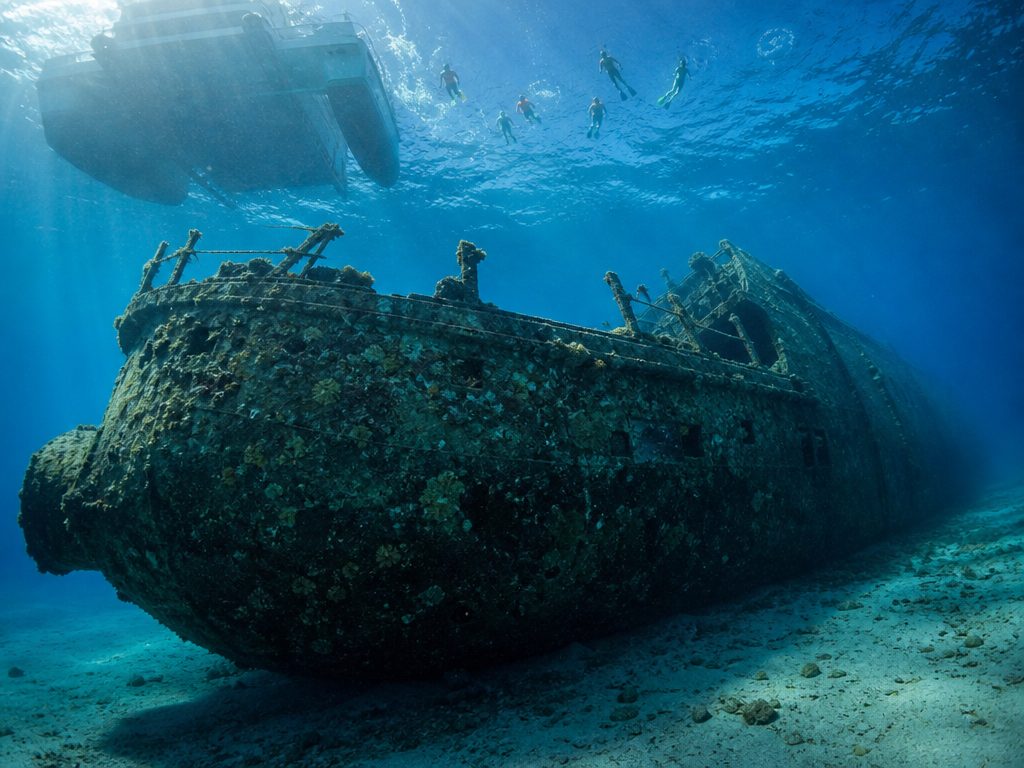
The MS Antilla, a German freighter scuttled during World War II, rests on its side in Malmok Bay and is one of the largest shipwrecks in the Caribbean. Because the wreck lies approximately half a mile offshore, it cannot be safely reached by swimming from the beach due to intense open-ocean currents and heavy boat traffic.
To access the wreck safely, you must book a guided boat tour. These excursions depart from the high-rise hotel district and the harbor in Oranjestad. Typical prices for a guided Antilla Shipwreck boat excursion range between 60 and 100 USD per person, which generally includes snorkeling gear, safety vests, and guide supervision.
Before booking, weigh the environmental conditions. The Antilla sits in open water where the sheltering effect of the island begins to diminish. The site is subject to significantly stronger wind chop, ocean swells, and surface currents than shallow shore reefs. If you are prone to motion sickness or lack the strength to swim in rolling waves, this offshore site may not suit you, and you should stick to the calm bays of Boca Catalina or Arashi.