

Most people who visit Aruba end up on the sand at Eagle Beach around six o’clock in the evening, waiting for the sky to turn orange. It is a reliable ritual, but it overlooks a fundamental truth of the island’s geography. The coastline is not a straight line, and the sun does not drop in the same spot all year round.
Finding the right vantage point requires understanding how the island’s western edge interacts with the seasons. Depending on the month, a spot that offered an open horizon in January might leave the sun disappearing behind a rocky headland or a line of hotel towers in June. Matching your position to the calendar changes a standard vacation sunset into a clean, unobstructed view.
The Seasonal Physics of Aruba’s Sunset Coastline
The idea that any west-facing beach offers an identical sunset is a common misconception. Because of seasonal solar declination, the path of the sun shifts continuously. During the summer solstice in June, the sun sets at its northernmost point on the horizon. As the months progress toward the winter solstice in December, this point moves steadily southward.
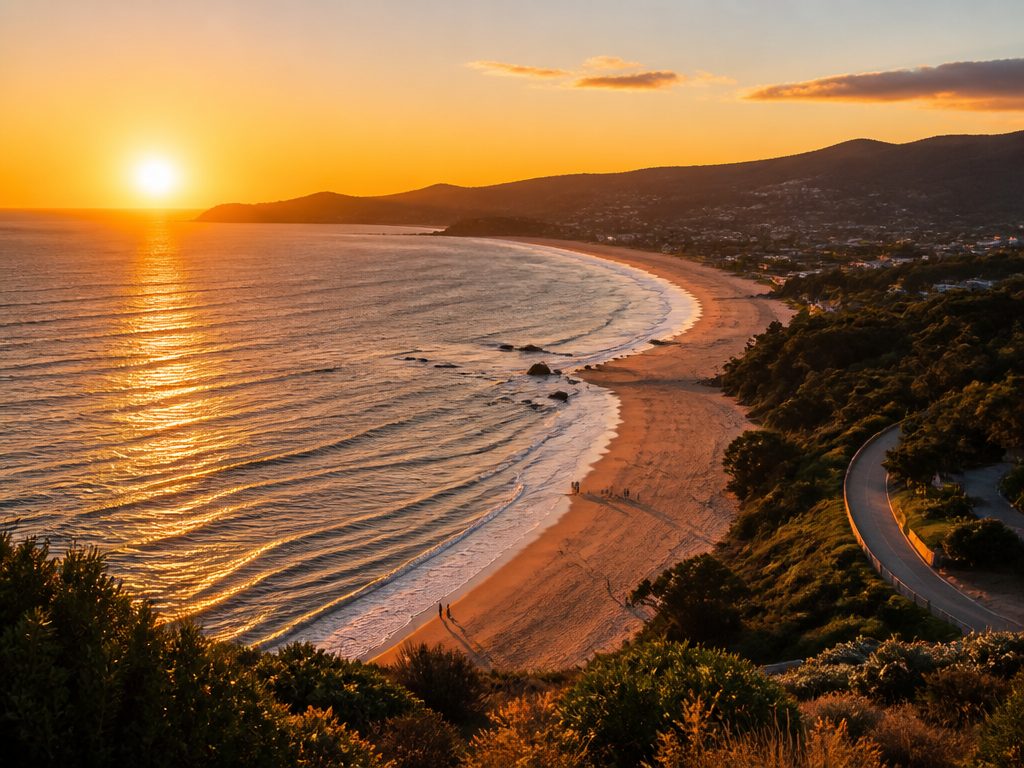
This shift changes how the light hits the shore. In the summer, northwestern beaches receive direct, front-on light as the sun dips into the sea. In the winter, the southern beaches get the cleanest angles. If you stand on a beach that curves inward during the wrong season, the sun will set behind land or buildings rather than melting into the water.
The weather adds its own variables. Aruba is famous for its steady trade winds, which blow from the east. These winds push moisture across the island, often creating a bank of low clouds just above the western horizon by late afternoon. While these clouds can block the final moments of the descent, they also catch the post-sunset light, turning deep shades of violet and crimson. On rare, perfectly clear evenings when the horizon is completely free of low-lying haze, you might catch the green flash, a brief, bright spark of emerald light that appears the exact second the top of the sun slips below the water line.
Eagle Beach: The Iconic Baseline and its Creative Challenges
Eagle Beach is the island’s classic sunset destination, and for good reason. Its wide white sands are home to the famous Fofoti trees, those wind-bent, low-growing specimens that point permanently toward the sea. These trees provide the ultimate graphic silhouette, anchoring the foreground while the sky flares behind them.

But popularity brings complications. By late afternoon, the shore fills with people. You will share the sand with family portrait sessions, couples walking hand-in-hand, and tourists trying to capture the same framing. Out on the water, catamaran sunset cruises line up like a small armada, parking directly in the path of the setting sun and cutting clean horizons in half with their sails.
For photographers, the challenge is isolation. To avoid a crowded frame, move away from the main resort access points and look for isolated Fofoti trees further down the beach. Using a longer lens can help compress the background, allowing you to crop out the catamarans on the water and keep the focus on the textured bark of the trees and the color of the sky.
Manchebo Beach: A Spacious Sanctuary for Unobstructed Perspectives
Just south of Eagle Beach, the coastline bulges westward to form Manchebo Beach. This subtle change in geography makes a significant difference in crowd density and perspective. Because the beach sits on a wide point, it feels vast and absorbs visitors easily, offering a quieter alternative for those who want space.
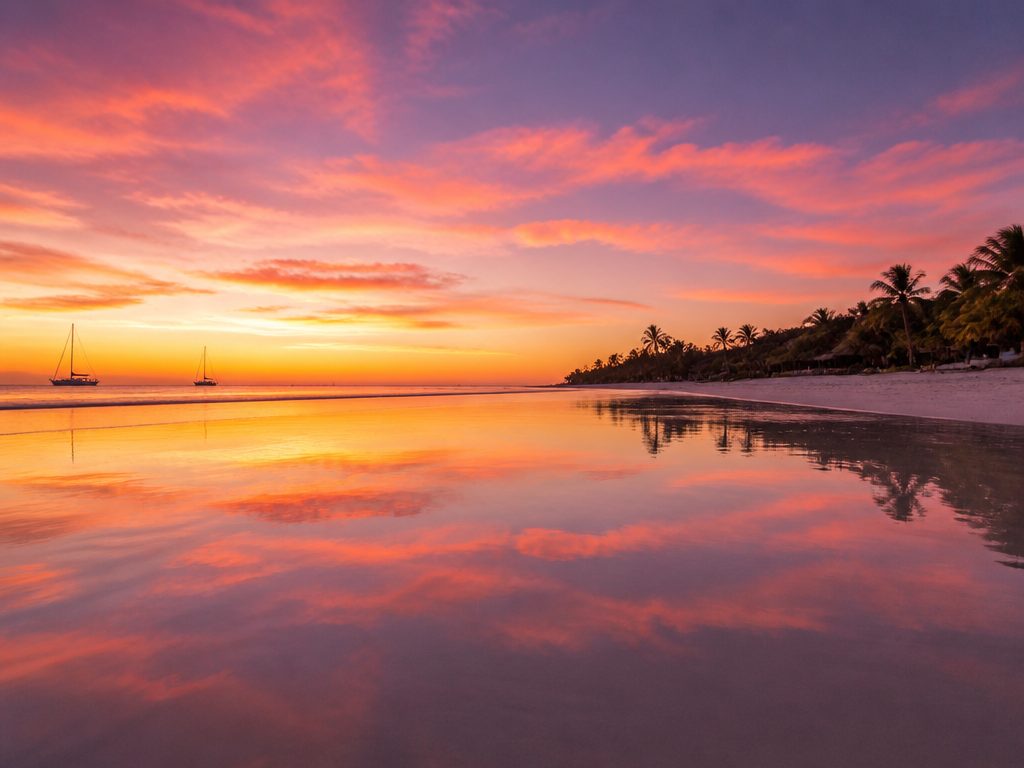
The romantic appeal here is the sense of distance. The shoreline is exceptionally deep, meaning you can walk far down toward the water and leave the resort buildings behind you. There are no crowded rows of lounge chairs right at the water’s edge, leaving the view open and uncomplicated.
Photographically, Manchebo is excellent for capturing scale. When the tide pulls back, it leaves behind wide stretches of wet, flat sand that act as a mirror. By positioning yourself close to the wet sand, you can capture symmetrical reflections of the pink and gold sky, creating clean, minimalist compositions that are difficult to achieve on busier shores.
Arashi Beach: Northern Light and Local Backdrops
On the northwestern tip of the island, the coast curves sharply, placing Arashi Beach in a unique position. The light here feels different from the southern beaches, catching the edges of the rocky outcrops and the waves with a sharper clarity.
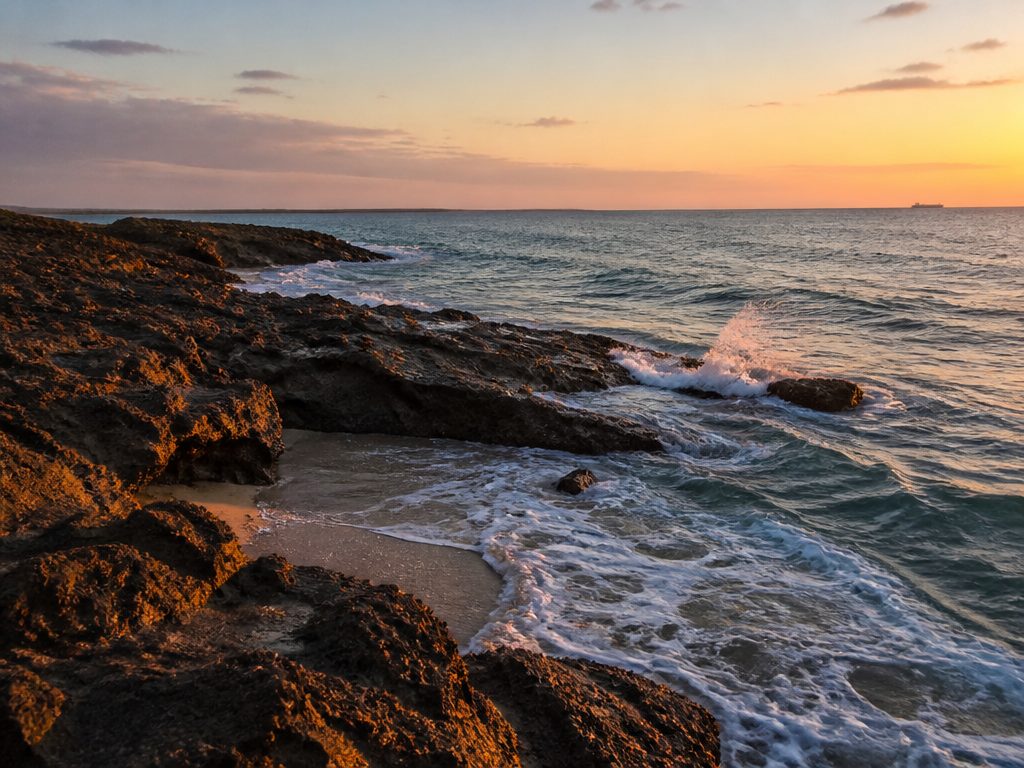
The atmosphere at Arashi is decidedly local. A rustic beachfront shack sits near the parking area, serving as a casual gathering spot where people watch the day end with a cold drink. It is a lively, unpretentious place where the sunset feels like a community event rather than a commercial excursion.
The trade-off at Arashi is physical comfort during the hot afternoon hours leading up to dusk. Arashi Beach has hardly any natural shade, so visitors should bring their own umbrellas if they do not plan to rent palapas. Without preparation, the hours before the golden hour can be punishingly hot under the direct sun.
The Sunset Selector: Matching Your Spot to the Calendar
To get the most out of your evenings, you must match your beach selection to the time of year and prepare for the unique environment of the Aruban coast.
Equatorial sunsets are brief. Because the island sits close to the equator, the sun descends at a steep angle, meaning the transition from full daylight to twilight is remarkably fast.
Aruba’s equatorial position means the transition from golden light to complete darkness happens in minutes, leaving no room for late arrivals.
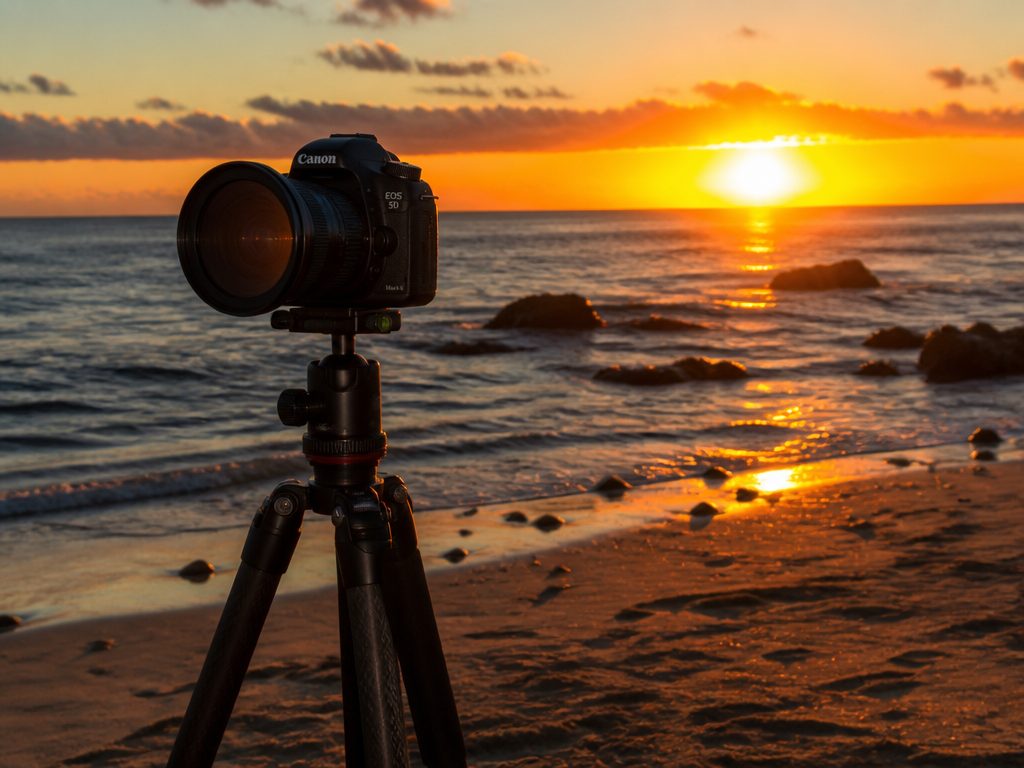
You should be in position with your camera gear set up at least forty-five minutes before the official sunset time to catch the best of the golden hour.
Working on the western coast also requires some defensive measures for your equipment. The same trade winds that keep the island cool blow fine sand and salty air across the beaches. Keep your camera inside a zipped bag until you are ready to shoot, avoid changing lenses on the sand, and use a clear protective filter on the front of your lens to shield the glass from the abrasive salt spray.
The table below summarizes how the main beaches compare to help you decide where to spend your evenings.
| Profile | Core Benefit | Primary Trade-off |
|---|---|---|
| Eagle Beach | Iconic Fofoti tree silhouettes for classic framing | Dense tourist crowds and catamaran boats blocking the horizon |
| Manchebo Beach | Wide flat sand reflecting the golden sky at low tide | Fewer distinct natural landmarks in the foreground |
| Arashi Beach | Dramatic northern perspective and casual local atmosphere | Barely any natural shade before sunset begins |