
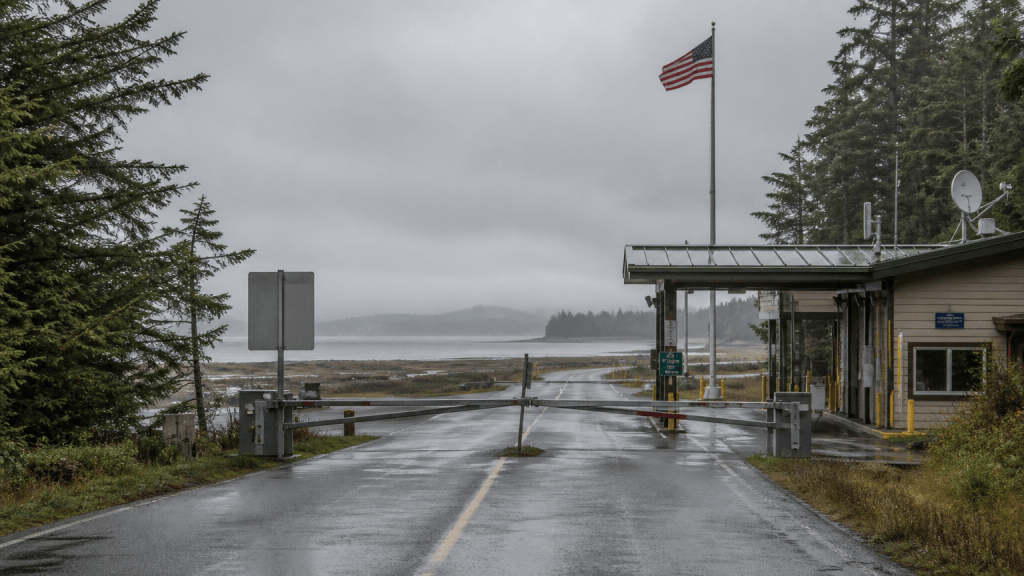
Some borders are drawn by people who will never have to cross them. In Point Roberts, Washington, a quiet community of roughly 1,100 residents, a single parallel lines out the terms of daily existence. This is an American pene-exclave, a piece of land attached physically to Canada but belonging to the United States. It sits at the southern tip of a peninsula, surrounded by water on three sides and bounded by an international boundary on the fourth.
To live here is to accept a quiet bargain with geography. Most days, the town feels like any other coastal Pacific Northwest settlement, smelling of salt air and cedar. But the illusion of normal small-town life dissolves the moment a resident needs to buy groceries, visit a doctor, or drop a child off at school. Every routine errand requires a passport and a willingness to explain oneself to federal agents.
| Metric | percent |
|---|---|
| The portion of local commercial retail spending in Point Roberts generated by Canadian visitors | 85 |
| The decline in economic activity in Point Roberts within a single year of COVID-19 border closures | 80 |
The Accidental Border and Its Isolated Residents
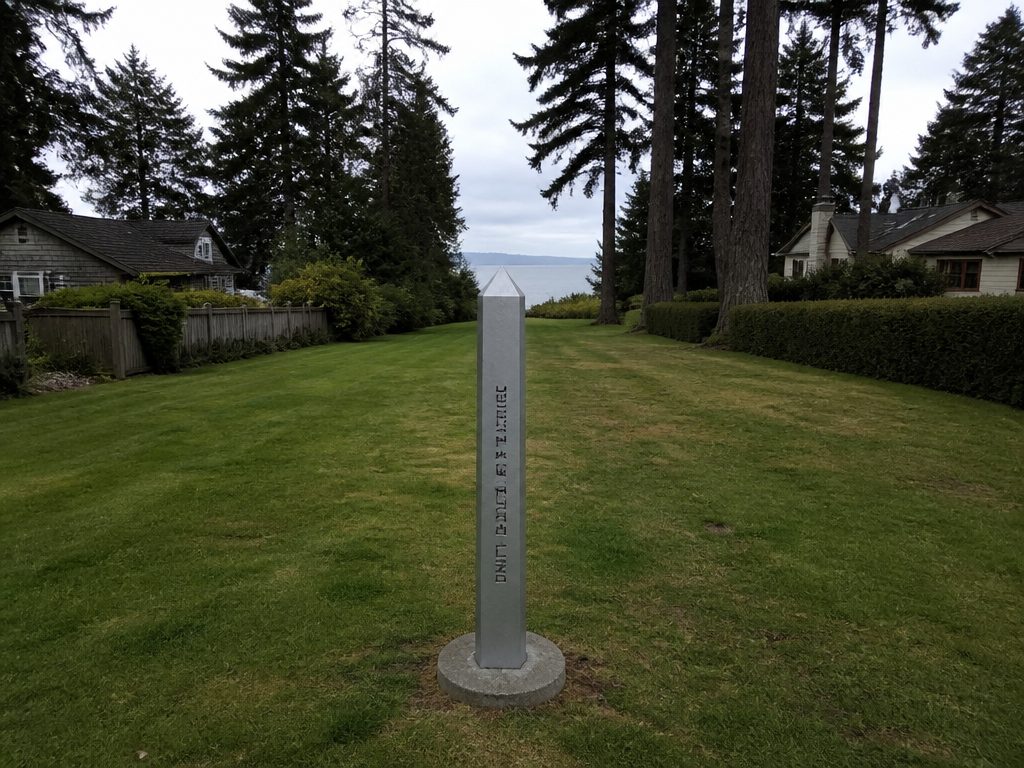
The isolation of Point Roberts was born from a stroke of a pen in 19th-century Washington, D.C. In 1846, British and American negotiators signed the Oregon Treaty, establishing the boundary between their territories along the 49th parallel. It was a simple geometric solution to a complex territorial dispute. The negotiators, however, did not notice that the line sliced clean through the bottom tip of a peninsula just south of Vancouver.
By the time the error was clear, the line was already fixed. The result was a geographical curiosity: five square miles of American territory stranded at the end of a Canadian peninsula. Today, the town’s residents live in a state of permanent compromise. The scenic views of Boundary Bay and the quiet streets offer a peaceful retreat, but the reality of the border is never far away. For those who choose to make their lives here, daily survival is a logistical tightrope walk where access to basic services requires navigating international checkpoints.
An International Commute for Schoolchildren

Childhood in Point Roberts is marked by a commute that begins before the school day does. The local school district only accommodates children up to the third grade. Once a student reaches the fourth grade, they must travel to mainland Washington to continue their public education.
This journey is a 25-mile one-way trip that requires traveling north out of Point Roberts, crossing into British Columbia, driving through Canadian municipalities, and then crossing south back into Blaine, Washington. The students must repeat this journey in reverse every afternoon. This routine means clearing international customs four times a day, five days a week. A child’s backpack is packed with passports and travel documentation alongside textbooks. Delays at the border are not excuses for tardiness; they are simply part of the schedule, turning an ordinary school day into a multi-state transit operation.
An Economy at the Mercy of Geopolitics
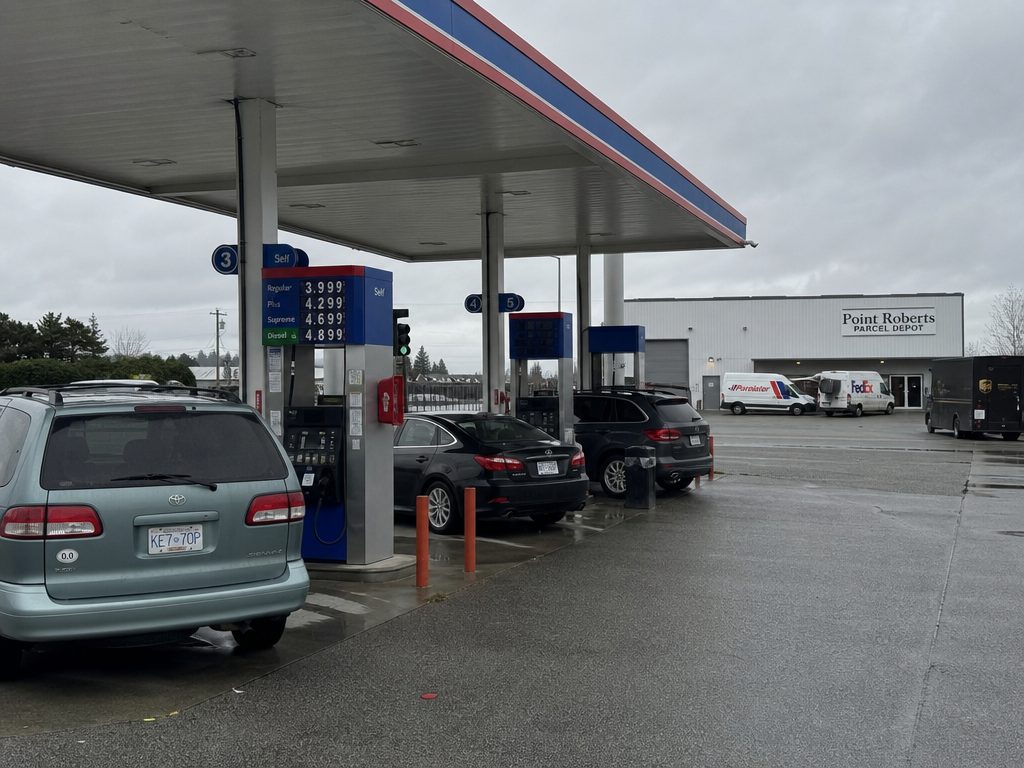
If the border dictates how residents live, it also dictates how local businesses survive. Point Roberts does not have the population density to sustain its own commercial district. Instead, the local economy relies almost entirely on visitors from north of the border. Canadians regularly cross into Point Roberts to buy cheaper gasoline, pick up mail-order packages at American shipping depots, and purchase groceries.
According to a U.S. Senate letter detailing the economic impact, an estimated 85 percent of local retail spending in Point Roberts is generated by Canadian visitors. This heavy reliance makes the community’s financial health fragile, leaving it entirely exposed to the shifting winds of federal border policies.
The danger of this dependence became starkly clear during the COVID-19 pandemic. When the land border closed to non-essential travel, the flow of Canadian customers stopped overnight. Within a single year of the border closures, local economic activity plummeted by 80 percent. Businesses that had stood for decades faced ruin, not because of a failure of management, but because a line on a map had suddenly turned into an impassable wall.
The Friction of Distant Bureaucracy
The core challenge of exclave life is that federal rules are rarely written with five-square-mile peninsulas in mind. Regulatory bodies in Washington, D.C., draft policies designed for major ports of entry, leaving places like Point Roberts to deal with the unintended consequences.
Living in an exclave means accepting that the rules governing your life were written for a continent, not a community.
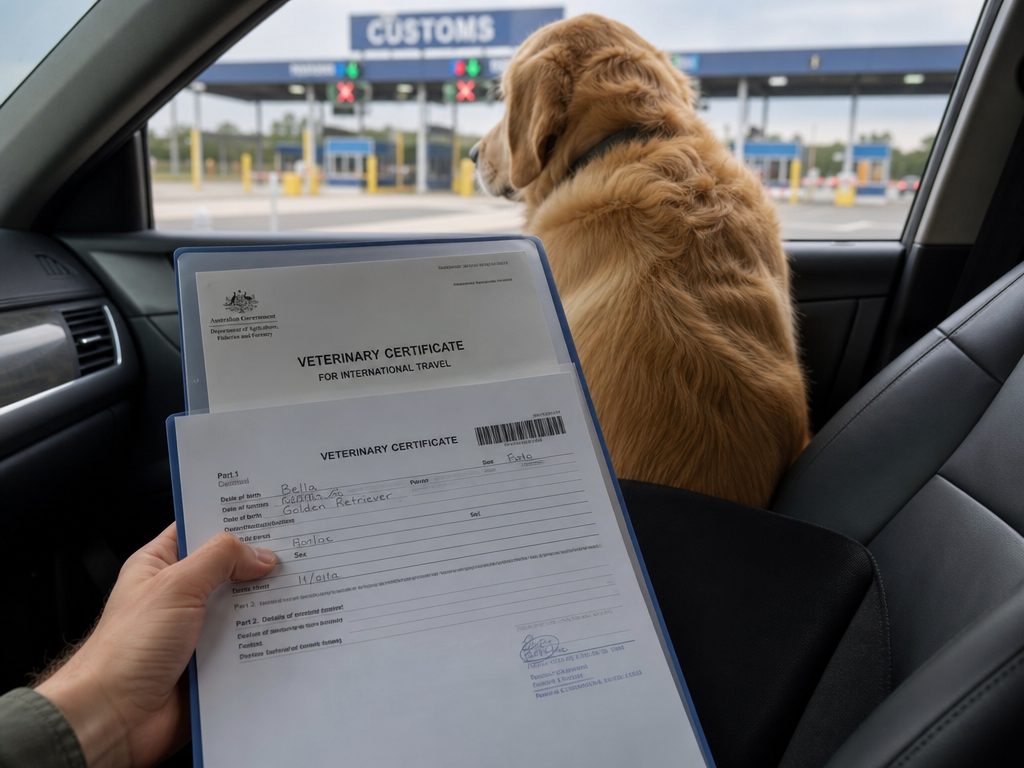
A recent example involves regulations on international pet travel. The Centers for Disease Control and Prevention, the U.S. federal agency responsible for implementing border regulations on dog travel, introduced strict documentation requirements for dogs entering the United States. The rules were designed to prevent the introduction of foreign animal diseases.
But for residents of Point Roberts, these sweeping federal rules became an immediate logistical headache. There is no veterinary clinic in Point Roberts. To take a sick pet to a doctor, owners must drive into Canada and back into the U.S. mainland. Under the guidelines, a simple veterinary appointment suddenly required navigating complex international import rules, multiple health certificates, and bureaucratic delays. It is a reminder that to distant policymakers, Point Roberts is an invisible anomaly, easily overlooked in the name of national security.
Navigating the Vulnerability of Exclave Life
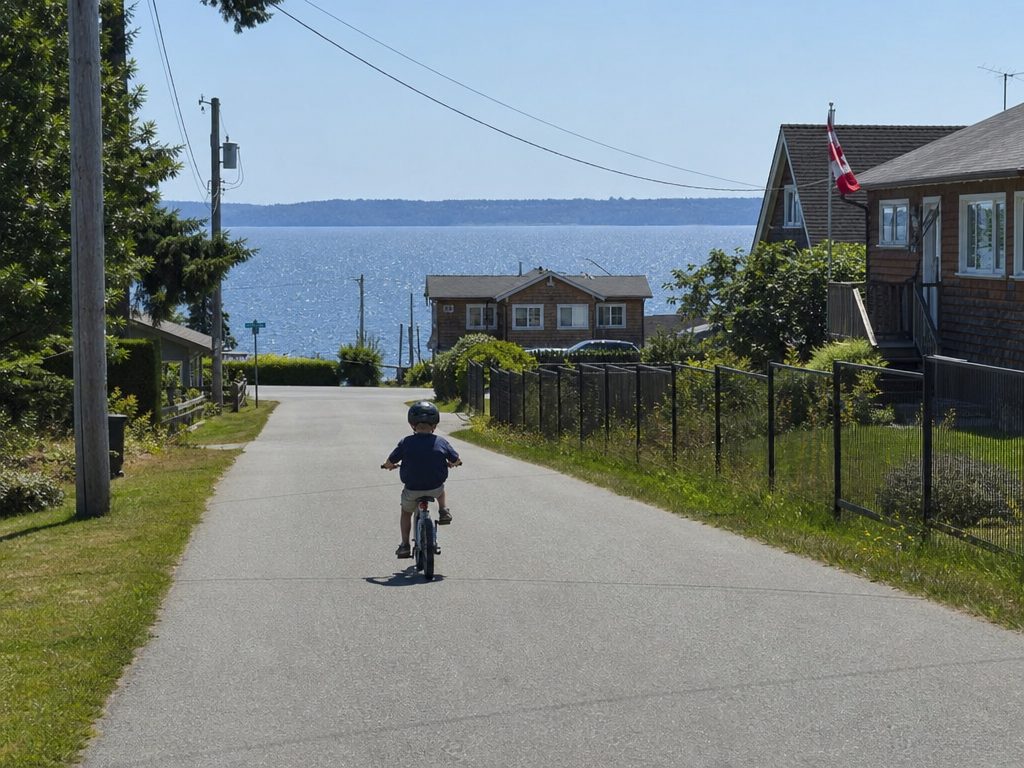
The people who remain in Point Roberts do so because they love the place. There is a rare beauty to a town where traffic is light, the air is clean, and the crime rate is negligible. Children can ride their bikes without worry, and neighbors know each other by name.
Yet this peaceful lifestyle rests on a highly fragile foundation. The survival of the community depends entirely on the continued, seamless cooperation of two national governments. If relations sour, or if a global crisis triggers another sudden border closure, Point Roberts is left isolated once again. Ultimately, Point Roberts serves as a reminder that borders are not merely abstract lines on a map. For those caught on the wrong side of geography, these lines are dynamic barriers that directly dictate the terms of human survival.